Powered By


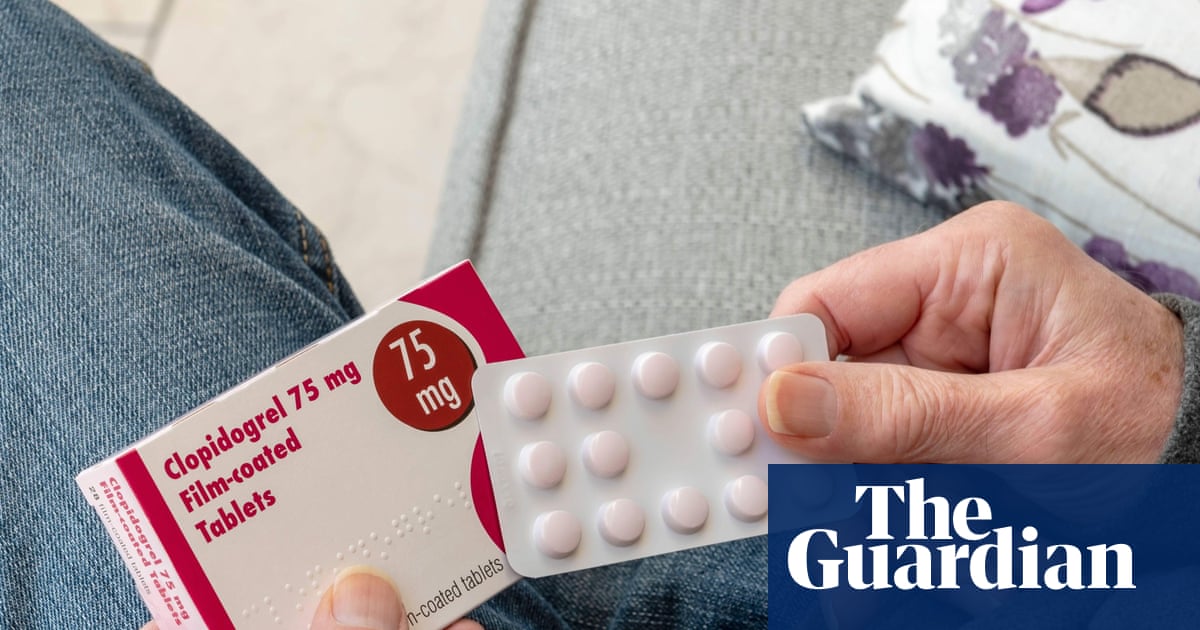
An interesting read in The Guardian over the weekend. Just wondering if anyone out there is taking clopidogrel instead of aspiring to stop clotting? If so, have you had any side effects worth noting?
https://www.theguardian.com/society/2025/aug/31...
I also read the article. I am going to ask my haematologist about it at my next appointment.
The issue with aspirin is that up to 1 in 3 people might be resistant to aspirin, which means that for them this drug doesn't work anymore or works less efficiently. That is when clopidogrel becomes useful.
The report in The Guardian fails to mention that, and the small improvement from clopidogrel as compared to aspirin can mean just that, the fact that clopidogrel is effective in people who are aspirin resistant.
Also, as other studies show, some people are not very consistent in taking their aspirin, many are given enteric coated aspirin that some studies showed might be less efficient and more likely to result in bleeding in the small intestine, so there are many other issues that might contribute to aspirin seeming less efficient, over and above the drug itself.
https://pmc.ncbi.nlm.nih.gov/articles/PMC3726079/
A meta-analysis on seven trials summing up ~29000 people might seem impressive, but it is in a way just an average study, and without proper controls of other factors that could have influenced the results, even an insignificant difference becomes significant. We need this difference between aspirin and clopidogrel to be replicated by another study before one changes treatment for millions and millions of people.
It is better to have a good discussion with your MPN specialist about this. Publicity in newspapers about the findings of a study does not include the fine details that are needed when a doctors decides the best treatment for a patient.
Also, that study explores the efficacy in 29000 people, which means that it refers to an average. This means that people for whom a drug works well are averaged with those for whom the drug works less well. Also, I doubt they explored the factors that contributed to aspirin working better or working less well. Same for clopidogrel. Rather than recommending a drug that was given en masse to be replaced with another drug to be given en masse, it would be much wiser to determine the factors/characteristics that would indicate which drug works best for each individual.


Low-dose aspirin is a commonly recommended treatment for MPNs to help prevent blood clots and cardiovascular problems like strokes and heart attacks. It works by making the blood less "sticky" and can help relieve platelet-related symptoms. For those with MPNs who need additional blood clot prevention, doctors may recommend Show Full Answer


 Continue with Facebook
Continue with Email
Continue with Facebook
Continue with Email

 Join
Join



 Your Privacy Choices