
Powered By



Polycythemia vera (PV) is a long-term, slow-growing form of blood cancer. With the right treatment, some people with PV may have a normal life expectancy. Advances in treatment and monitoring are helping doctors better prevent and manage complications of PV.
Keep reading to learn more about what research shows on survival rates with PV and the factors that play a role in your prognosis (outlook).
Sign up to view the results!
 Continue with Facebook
Continue with Email
Continue with Facebook
Continue with Email
PV grows slowly but can progress over time. It’s possible to live with this disease for several decades. PV survival rates have improved over time, although PV can still shorten life expectancy for some people.
Studies show the median survival with PV is around 15 years after diagnosis. This means that half of people with PV live less than 15 years after they’re diagnosed, and half live more.
 Survival rates are estimates based on research in large groups of people. Everyone’s experience living with PV is unique. You may have a shorter or longer life expectancy than what’s seen in studies based on details about your health.
Getting treatment and managing complications may help improve your outlook with PV.
 Blood Clots and Clotting-Related Events Shorten Life Expectancy With PV
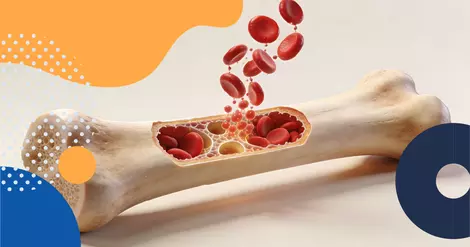
In PV, the bone marrow produces too many red blood cells (RBCs), making blood thicker than normal. The risk of blood clots increases because thicker blood flows more slowly than normal.
Blood clots can quickly become dangerous if they block blood flow to the brain, heart, or lungs. PV increases your chances of complications such as:
One retrospective study looked at more than 50,000 people with Medicare ages 65 and older who were newly diagnosed with high-risk PV. A retrospective study looks back at existing medical records or other previously collected data. Those who had a blood clot-related event had a significantly higher risk of death than those who didn’t have one.

The median survival, meaning the point when half of participants were still alive, was 5.1 years among those with PV who had a blood clot-related event within one year of diagnosis.
On the other hand, median survival for those who didn’t have a clot-related event was not reached during the study because more than half of participants were still alive.
Progression to Acute Myeloid LeukemiaIn some cases, PV progresses and eventually becomes acute myeloid leukemia (AML). AML develops in immature blood-forming cells in the bone marrow, most often cells that would normally develop into white blood cells (WBCs).
The risk of developing leukemia with PV increases over the years. In a report of 1,545 people with PV ages 18 and older, the following percentages developed AML after years with PV:
AML is an aggressive, fast-growing cancer that needs immediate treatment. In a study following people with myeloproliferative neoplasms (MPNs) who had an AML diagnosis, the median overall survival was 7 months.
This study didn’t separate PV from other types of MPNs. Your life expectancy and outlook with AML and PV may be different than what research shows.
Post-PV MyelofibrosisA small percentage of people with PV eventually develop myelofibrosis (MF), which is another type of MPN. This is known as post-PV MF. In the study of 1,545 participants with PV, 9 percent progressed to post-PV MF.
MF is a more aggressive blood cancer than PV. Survival rates tend to be worse if you develop MF after living with PV for some time. The median overall survival with secondary MF is between 5 and 7 years.
Many factors play into your life expectancy with PV. Some factors, like sticking to your treatment plan, are within your control. Others, such as older age and genetics, can’t be changed. Your PV specialist can help you understand your risk factors.
 Low-Risk and High-Risk PV
Doctors typically classify PV as high or low risk for blood clots. High-risk PV means you’re 60 or older or have a history of blood clots. Low-risk PV means you don’t have either of those risk factors.
Researchers have also developed models to estimate survival with PV. In the study of 1,545 participants with PV, researchers divided participants into low-, intermediate-, and high-risk groups.
They found that median survival for these groups was:
Older Age and PVThose with risk factors like older age and health complications are likely to have a shorter life expectancy. People who are younger when they’re diagnosed with PV tend to live longer.
The median survival for people ages 40 and younger is over 35 years.
Researchers have also looked at median survival across different age groups. They found that younger people with PV live longer:
Certain Gene Changes Raise Your Risk of PV ComplicationsPV is primarily caused by changes in the JAK2 gene, which controls cell growth. Newer research shows that having other gene changes affects your risk of complications and life expectancy.
Studies estimate that more than half of people with PV also have other gene variants or differences. Some of these variants are associated with a higher risk of developing leukemia or post-PV MF.
About 95 percent of people with PV have a gene variant called JAK2V617F. Having a higher amount of this variant in the blood is associated with a higher risk of scar tissue formation in the bone marrow.
Bone marrow scarring at diagnosis and ongoing high WBC counts are also associated with a higher risk of developing post-PV MF.
PV Treatments Can Improve Life ExpectancyIn recent years, researchers have discovered new and better ways to treat PV and lower the risk of complications. Following your treatment plan can help keep the condition under control.
Hydroxyurea is often used as an initial treatment for PV. For those who don’t respond to hydroxyurea, newer options are available. JAK inhibitors like ruxolitinib (Jakafi) block growth signals that cancerous blood cells use.
One study of 178 people with PV looked at 5-year event-free survival (EFS), meaning participants remained free from post-PV MF, blood clots, bleeding, or death. The 5-year EFS rate was 70.4 percent. The median age of the participants was 65.8 years. The authors found that certain early responses to ruxolitinib were associated with better outcomes later on.
It’s also important to lower your risk of blood clots to avoid life-threatening complications. Supportive therapies for PV include low-dose aspirin, which helps reduce the risk of blood clots, and phlebotomy (drawing blood to lower RBC levels).
Rusfertide (Mimrylo) is a new drug recently approved by the U.S. Food and Drug Administration (FDA) to treat people with PV whose blood cancer hasn’t been effectively controlled with therapies. During the 32-week clinical trial, participants were either given rusfertide or a placebo (inactive treatment) and monitored for their level of risk for life-threatening complications.
Among participants who received rusfertide, 76.9 percent didn’t require phlebotomies to keep their risk for life-threatening complications lowered. On the other hand, 32.9 percent of participants given a placebo didn’t require phlebotomy.

PV affects everyone differently, and several factors can influence your outlook. Talk to your PV specialist about your overall health and the steps you can take to lower your risk of complications.
Taking your treatments as prescribed and working closely with your care team can help lower your risk of complications. For some people, it’s possible to have a normal life expectancy after a PV diagnosis.
 On myMPNteam, people share their experiences with myeloproliferative neoplasms, get advice, and find support from others who understand.
What other questions do you have about life expectancy with polycythemia vera? Share them in the comments below.
Get updates directly to your inbox.



 Continue with Facebook
Continue with Email
Continue with Facebook
Continue with Email
Continue with Facebook
Continue with Email
Continue with Facebook
Continue with Email
Become a member to get even more





 Join
Join



 Your Privacy Choices

This is a member-feature!
Sign up for free to view article comments.
What are all the medician for PV high risk. Having problems with not feeling like doing anytjing.
We'd love to hear from you! Please share your name and email to post and read comments.
You'll also get the latest articles directly to your inbox.